
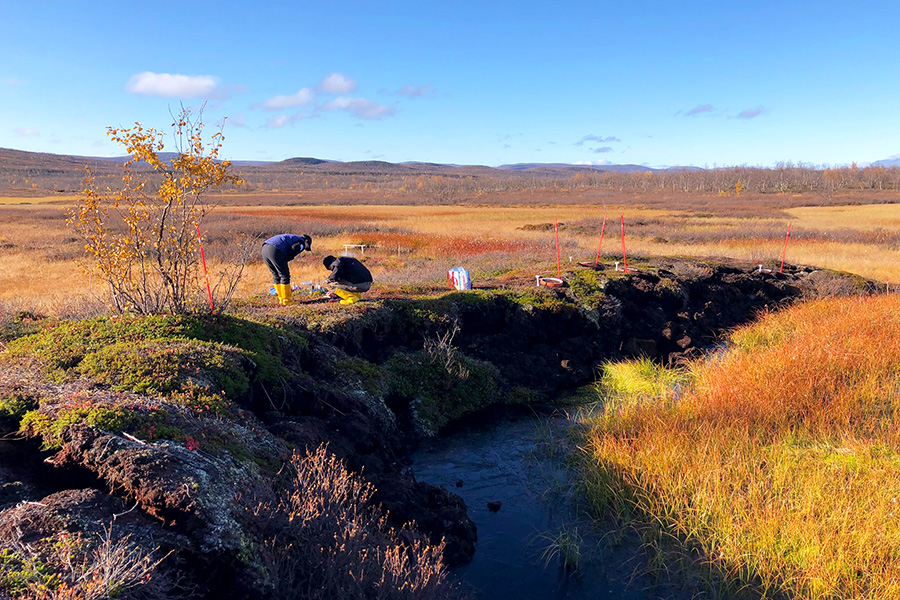
Headwall of a thaw slump along the Miner River, 85 km southeast of Tuktoyaktuk, NWT, Canada. Credits: Carolia Voigt, AWI (2025).
News
Here you can find news and updates about the project, including recent findings, upcoming events, and other relevant information. Check back regularly for the latest news and developments from the  project!
Sailing and Science: It's the Cryogrid Hackathon Held at Sea
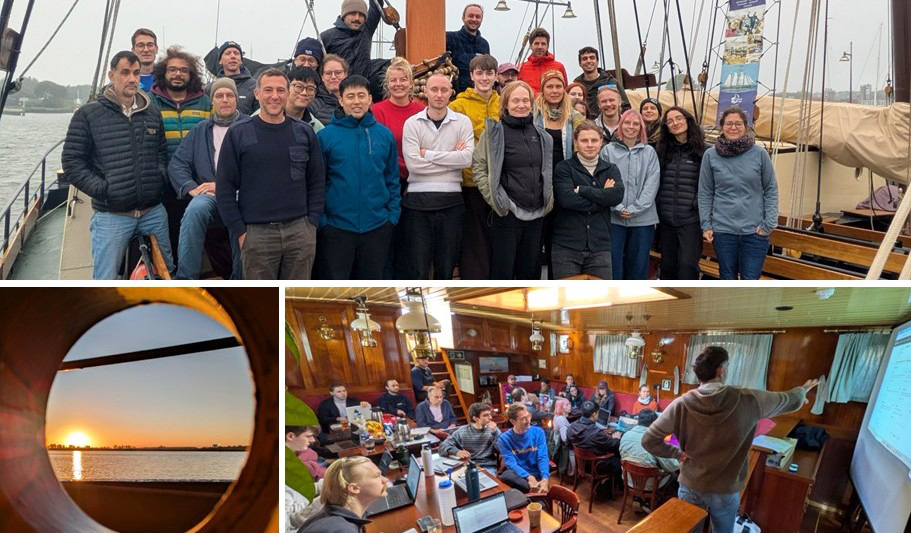
From 11 to 16 October 2026, 30 researchers gathered aboard a sailing boat in the Netherlands for the 8th ITCH hackathon, held with to advance CryoGrid-based permafrost modelling and cryosphere research. Participants shared ongoing projects and future plans, with talks covering permafrost processes, model applications, and broader research questions. Breakout groups explored mountain permafrost, vegetation and fire, ground ice and thermokarst, and hydrogeology. The event brought together early-career and senior researchers from partner institutions, creating space for cross-project exchange and collaboration. [read more ...]
at the Permafrost Carbon Network Workshop in Colourful Aspen
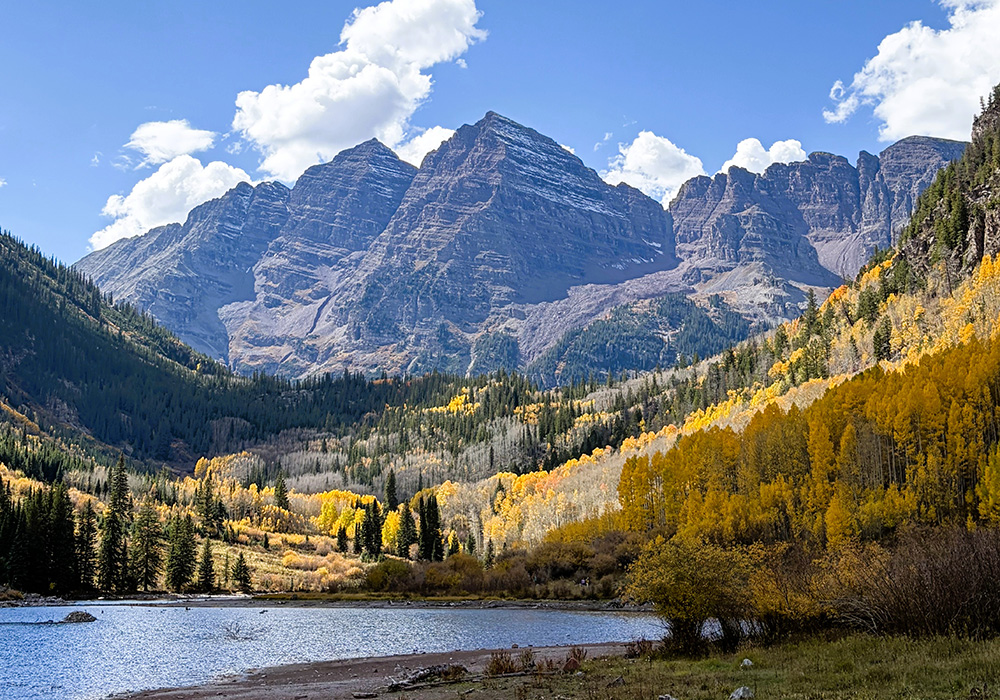
From 4 to 8 October, researchers joined the Permafrost Carbon Network workshop in Aspen, Colorado, to synthesize recent permafrost-carbon science ahead of the IPCC’s seventh assessment report. The workshop addressed abrupt-thaw emissions, fire and vegetation feedbacks, freshwater emissions, land-model priorities, and the wider impacts of permafrost change on ecosystems and people. Participants developed short-term synthesis projects and identified longer-term collaborations relevant to . The meeting brought together international researchers, strengthening connections across the permafrost-carbon research community. [read more ...]
A Long Field Season Successfully Completed in Northern Finland
researchers completed three field campaigns in Kilpisjärvi, northern Finland, from June to September, studying how permafrost thaw affects greenhouse-gas exchange in subarctic peatlands. At the Peera palsa and Saarikoski sites, collapsing palsas are giving way to waterlogged, permafrost-free mires. The team measured CO2, CH4, and N2O fluxes along thaw gradients from palsa tops to inundated areas, while collecting soil samples for biochemical and microbial analyses. The work, conducted with the COLDSPOT project, will help show whether these shifting habitats act as sinks or sources of greenhouse gases. [read more ...]
Hundreds of Gas Measurements During Canada’s Arctic Field Season
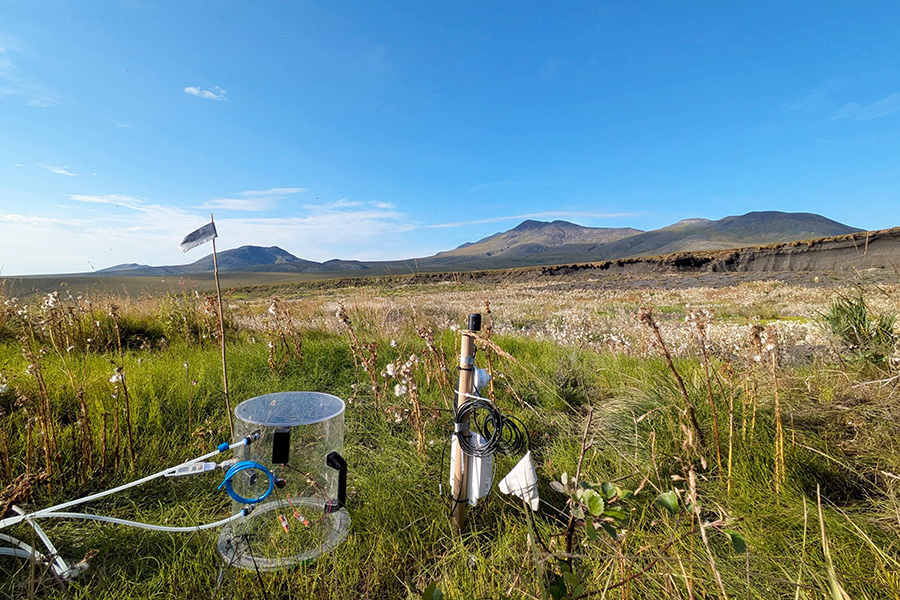
The 2026 Canadian field season ran from late June to late September, investigating permafrost-carbon dynamics across the Northwest Territories and northern Alberta. Teams measured lateral gas fluxes and greenhouse-gas emissions in peatlands, retrogressive thaw slumps and lakes. They completed ERT surveys, established a new sentinel monitoring site, and collected plant, litter, and soil samples for the project. Work spanned the Peel Plateau, Redstone River area, Mackenzie Delta and regions near Inuvik and Yellowknife, yielding extensive samples and data. [read more ...]
Summer Field Work Concluded from Interior Alaska to the Arctic Coast
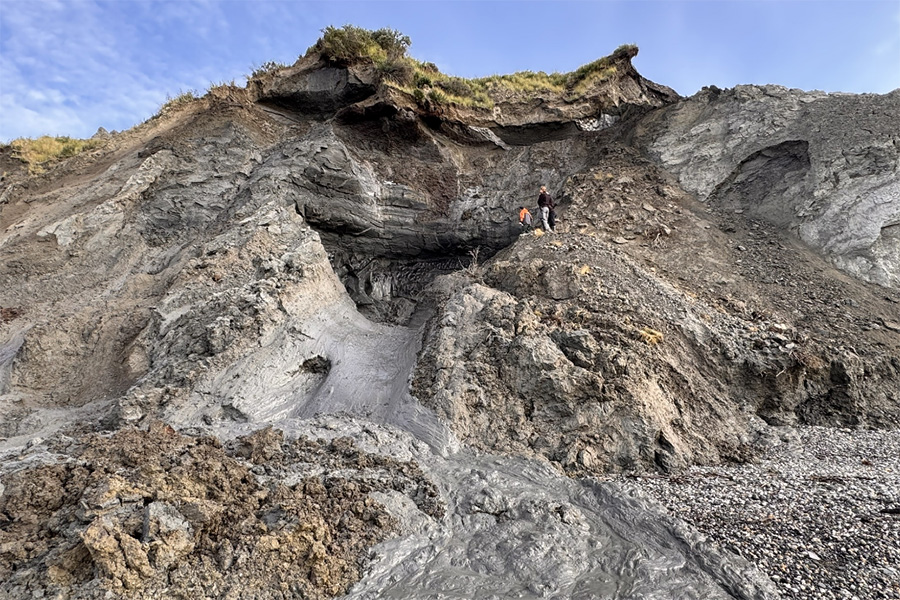
Alaska’s 2026 field season extended from Interior Alaska to the Arctic Coast, examining how thawing permafrost affects greenhouse-gas emissions and ground conditions. Teams from UAF and AWI measured gas fluxes, ground temperatures, active-layer and talik depths, and permafrost conditions across gullies, thermokarst mounds, lakes, drained basins, and polygonal tundra. They also collected permafrost cores, soil and driftwood samples, hydrochemical data, and drone and geodetic surveys near Fairbanks, Nome, Unalakleet, Kotzebue, and Utqiaġvik. Thousands of flux measurements were completed, with more planned as lakes freeze. [read more ...]
Between Steppe and Mountains: at the Asian Conference on Permafrost
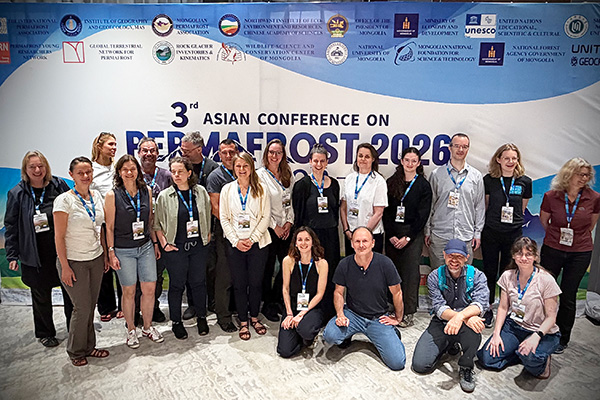
team members contributed to the 3rd Asian Conference on Permafrost in Ulaanbaatar, Mongolia, from 28 June to 2 July 2026. Their contributions covered permafrost landscape visualisation, science communication, youth engagement, surface water chemistry in Alaska, and paleoecological research in Siberia. The conference also provided opportunities for scientific exchange and exploring Mongolia’s diverse landscapes. A special highlight was Vladimir Romanovsky receiving the IPA Lifetime Achievement Award in recognition of his outstanding contributions to permafrost science. [read more ...]
Sailing, Coding, and Cryosphere Science
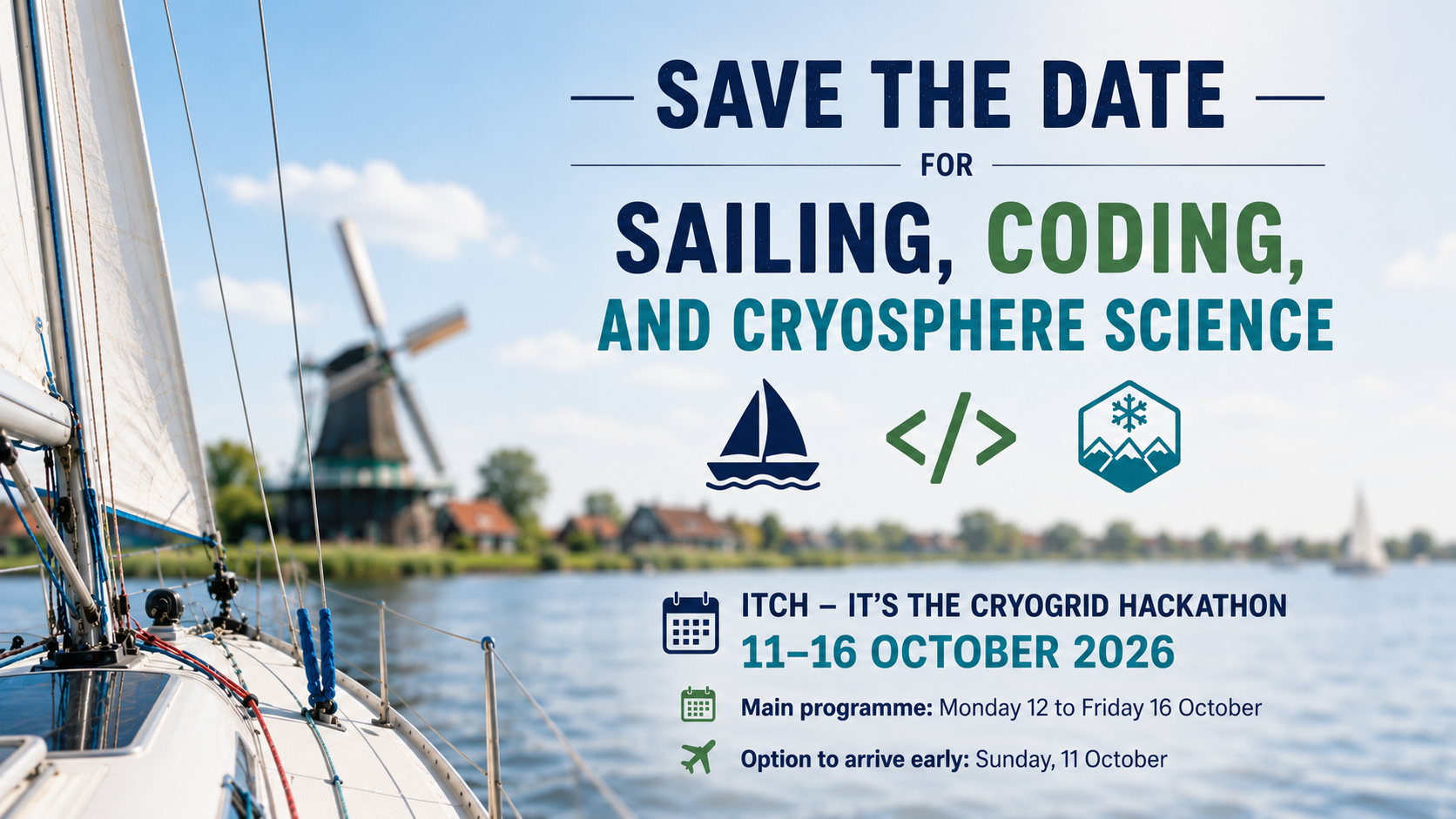
ITCH 2026 invites researchers to combine coding and cryosphere science aboard a sailing boat in Enkhuizen, Netherlands (11–16 October). Held alongside a workshop, the event offers space for collaboration on CryoGrid and beyond. Participation is free (travel costs excluded). Save the date for a unique and inspiring week on the water. [read more ...]
New IPA Action Group for Science Communication
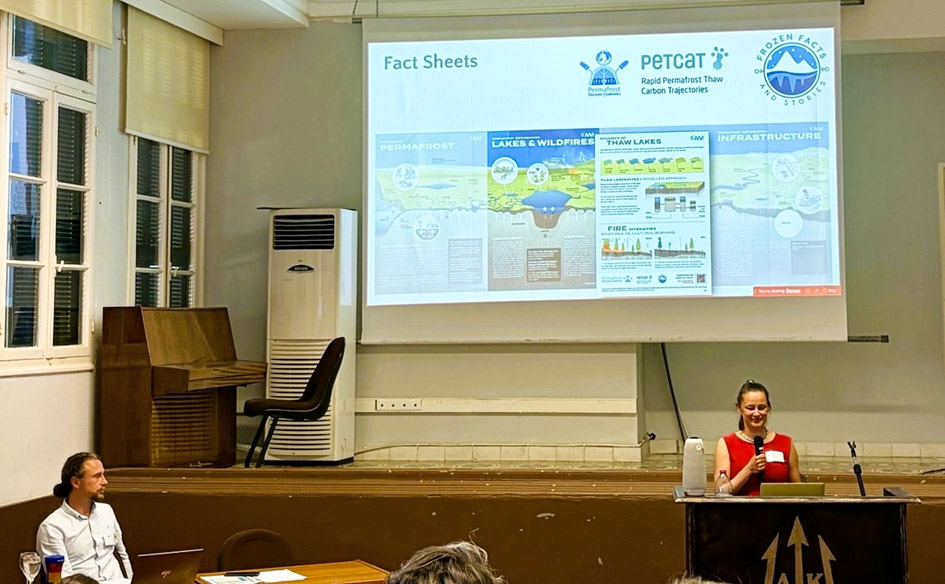
is part of the new IPA Action Group “Frozen Facts and Stories”, joining forces with Permafrost Discovery Gateway and ILLUQ to strengthen science communication. The initiative develops visual and accessible materials on permafrost research and its societal relevance. A first workshop in Greece launched work on key products such as fact sheets. [read more ...]
Kicking-Off Virtually and Full of Excitement
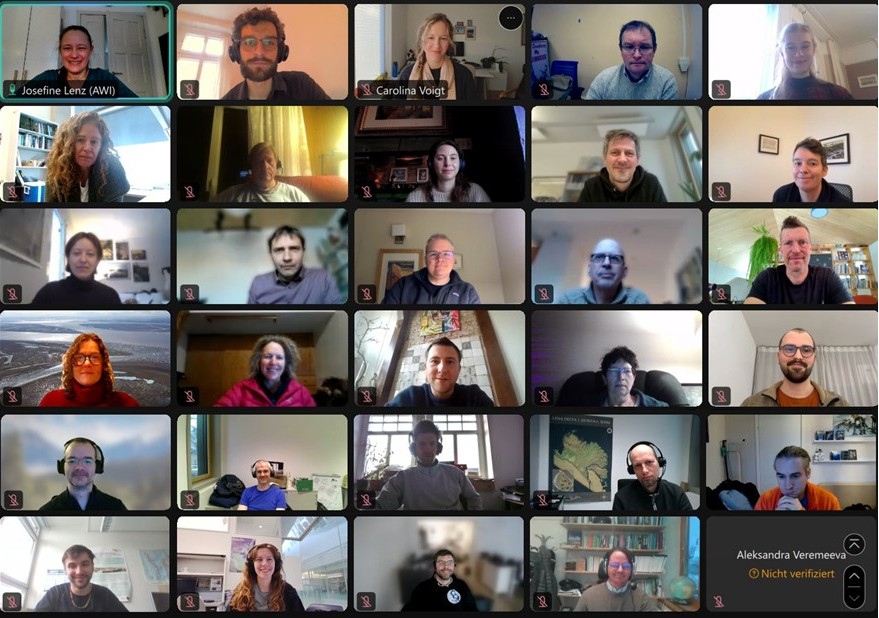
The project launched with an engaging online kick-off, bringing together thirty researchers from eight institutions to share plans and align goals. Since then, the team has built strong momentum through follow-up meetings on radiocarbon dating, modelling needs, and summer fieldwork, laying the groundwork for close collaboration across disciplines and partners. [read more ...]
Convening with Schmidt Sciences in NYC

participated in the Launch Convening of Schmidt Sciences’ Virtual Institute for the Carbon Cycle (VICC), joining funded projects and advisors to align research goals and identify collaboration opportunities. The event combined strategic discussions on carbon cycle science with informal networking, fostering a strong foundation for future joint efforts. [read more ...]